The Place and Opportunity Commission: why national growth must begin with place
Reports that graduate job vacancies have fallen to their lowest level in a decade will concern the record number of young people preparing to enter university this autumn.
Graduate vacancies have reportedly fallen by 45% over the past year, although opportunities have grown in areas like teaching, construction and manufacturing. This sits alongside a wider crisis in youth participation, with more than one million 16 to 24-year-olds not in education, employment or training at the beginning of 2026.

The challenge is not simply whether jobs exist, but whether young people are supported to remain engaged with education and work - and whether they have the skills, information and local connections needed to reach the opportunities available.
And this question looks different everywhere.
This comes as the Government attempts to change how economic and social policy is delivered. Its ‘Rewiring the State’ programme promises greater local control over skills, employment support, housing, transport and public services. No. 10 North is intended to place regional growth at the centre of government, while Whitehall officials are reportedly being sent to support mayors as new powers are transferred.
There is considerable political energy behind place. The harder task will be turning it into better outcomes. This is why our Place and Opportunity Commission, first launched in 2025, matters now.
Why place matters
Recent policies recognise that growth is shaped by more than the abstract numbers of jobs created nationally. New procurement rules will reward organisations that create good jobs, address local skills shortages and support young people into work. Planning reforms aim to build more homes around transport links, while mayors are expected to gain greater control over vocational education and employment support.
But places begin from very different positions. Some have established institutions, strong business networks and significant capacity to attract investment. Others do not. Transferring power without recognising those differences could strengthen the places already best equipped to use it.
A missed employment opportunity might reflect unsuitable training, poor transport, ill health or insecure housing. Each issue may belong to a different government department, but they meet in the life of one person and the economy of one community.
National figures therefore tell only part of the story. More than one million young people aged 16 to 24 were not in education, employment or training at the beginning of 2026, but the rate varies considerably between regions. GCSE results also showed London continuing to outperform other parts of the country.
Young people may sit the same examinations and enter the same national economy, but the conditions surrounding them are anything but the same.
The role of the Commission
Chaired by Paula Sherriff, the Commission, part of The Purpose Coalition and proudly run by This is Purpose, brings together political leaders, employers, educators and community organisations to understand why opportunity remains unevenly distributed - and what practical action can change that.
Its work is organised around places rather than Whitehall departments. Paula’s experience as the former Labour MP for Dewsbury and Labour Shadow Minister is central to this approach. In Parliament, and through the cases brought to her constituency office, she saw how national decisions were experienced by families, employers and public services. Her earlier career in the NHS also reinforced the importance of acting early and joining up support around people.
The Commission is developing its recommendations directly from local evidence, practical experience and the ideas emerging from communities themselves.
Taking the conversation across the country
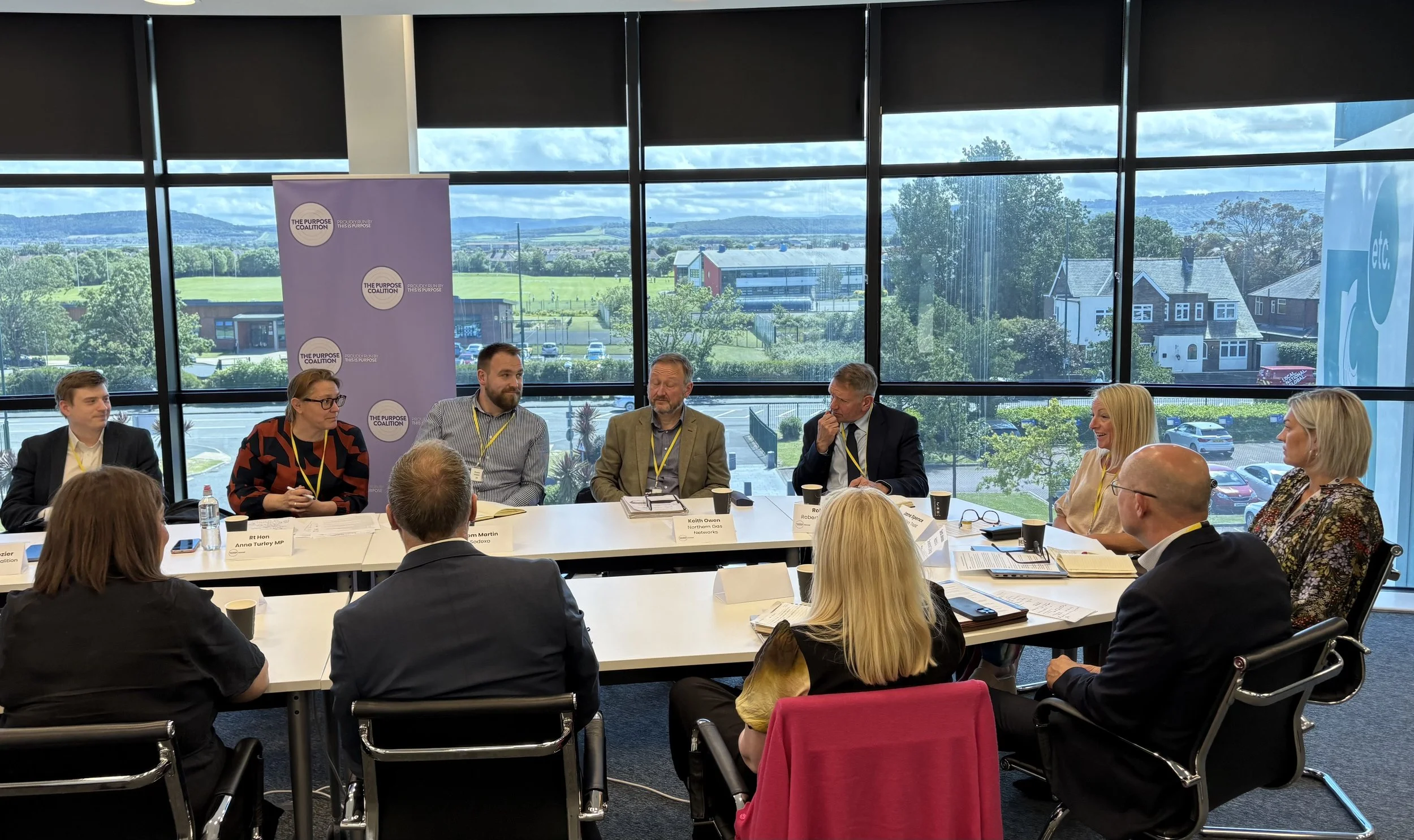
Rt Hon Anna Turley MP hosting a Place & Opportunity Commission Roundtable in Redcar on 12th June 2026
Since 2025, the Commission’s evidence base has been developed through discussions in Edinburgh, Wolverhampton, Hartlepool, and Redcar.
Ahead of its first report, a programme of further sessions is planned in places like Manchester, Edinburgh, Leeds, Stirling, Southampton and South London.
Each will explore a shared national challenge through a local lens: connecting people with Edinburgh’s economic opportunities; strengthening routes into sectors facing workforce demand in Leeds; tackling youth disengagement in Southampton; and understanding how persistent disadvantage can exist alongside the wealth and employment opportunities of the capital.
These discussions will involve MPs, businesses, SMEs, educators, local government and community organisation, all of which hold part of the evidence and part of the solution.
Why this work is needed now
The Government’s devolution programme asks important questions. How should funding reflect the different starting points of different places? What capacity will local institutions need? How should responsibilities be shared between MPs, mayors and councils?
These questions will become more urgent ahead of the Government’s autumn White Paper, fiscal devolution roadmap and Budget.
The Purpose Coalition is excited to invite partners from across the country into these vital discussions. The Commission’s first report will launch at The Purpose Coalition’s Christmas Reception at the end of this year,bringing together insights from sessions held on the ground in places right across the country.
It will go further than simply describe Britain’s geographical divides. It will identify what is working, what continues to get in the way and how policymakers can support local partnerships to go further - ensuring that, as power moves away from Westminster, the experiences and ambitions of communities’ shape what comes next.