
How the Northumberland Line is opening up opportunity
Where you grow up should never determine how far you can go in life. Yet for too many people, the opportunities they can realistically pursue are limited by the transport available to them. A job, apprenticeship or college place can be only a few miles away and still feel beyond reach.
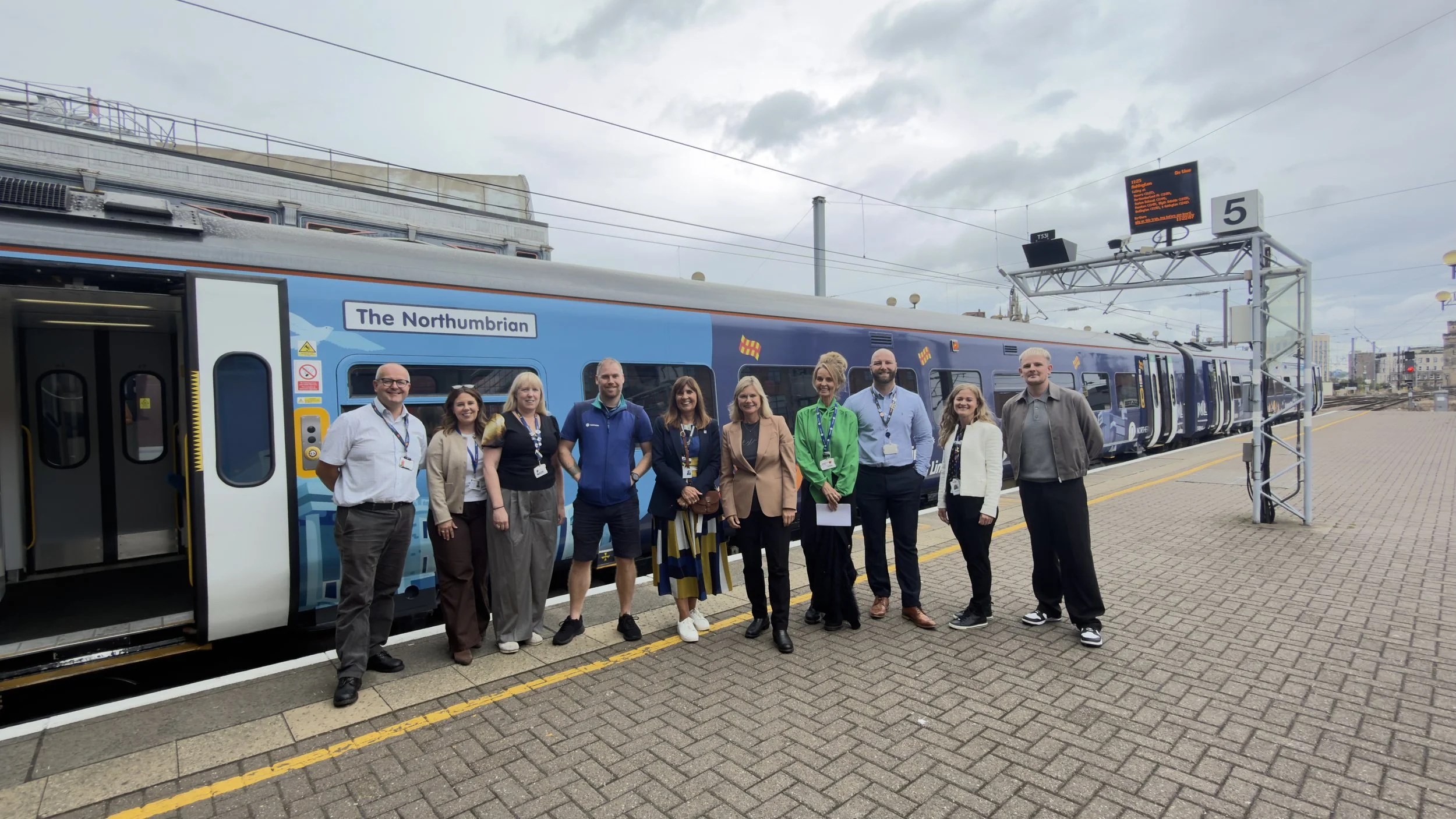
Our recent visit to the Northumberland Line showed what happens when transport stops becoming a block and instead becomes a connector. Travelling with Northern Trains from Newcastle to Ashington, and stopping at Blyth Bebside, we saw first-hand how reconnecting communities can transform the opportunities people can access and in doing so support the places they call home.
I joined Northern’s Managing Director, Tricia Williams, colleagues and partners to explore the difference the new line is making. It’s only been open since December 2024 but the difference it’s already making for people on the ground is obvious, just by looking at how busy the trains are. What struck me was how closely its success is connected to the relationships Northern is building with local communities, schools and organisations supporting young people. Strong local relationships and the success of the line have gone hand in hand.
The passenger figures give a sense of how great the demand has been. After reopening in December 2024, following 60 years without passenger services, the line recorded more than 920,000 journeys in its first year alone, exceeding forecasts. By January 2026, just over a year later, it had passed one million. These are significant milestones for a railway that has restored a direct connection between communities in south east Northumberland and Newcastle.
It’s clear to me the new line’s significance lies in the choices that it’s connection creates. A more manageable commute can allow someone to apply for jobs in a significantly wider catchment area and for the Northumberland Line, that now includes jobs in Newcastle itself. The direct train is making a wider set of college courses at a choice of local FE colleges along the line now practical for a young person. For a young person without a car, being able to travel independently can change their expectations of what comes next.
At Ashington, we met Councillor Glen Sanderson, Leader of Northumberland County Council. The line’s renaissance reflects the sustained commitment of the Council that Glen leads and the work with so many partners who collectively have brought it back into passenger use, including Northern, Network Rail, the Department for Transport and the North East Mayoral Strategic Authority. Delivering a project of this scale takes persistence, and that local leadership deserves recognition. It’s been an incredible project to see delivering so many benefits on the ground for people.
Our visit also brought us together with Lewis McKenna, station adopter at Ashington, through Newcastle United Foundation and The King’s Trust. Discussing the employability work with young people illustrated why the community relationships around a station matter. Supported by the Northern partnership, Lewis and his team are connecting young people with employers and helping them prepare for work - the new transport connection gives that a much greater purpose.
A railway can make an opportunity easier to reach, while a trusted local organisation can help someone build the confidence to take advantage of that. Bringing those efforts together is especially valuable for young people who may need encouragement or support to make their first step into employment. Station adoption, getting community volunteers to help make a station truly owned by the community it serves, also gives local people a stake in the railway’s success.
Our stop at Blyth Bebside offered a different perspective again, through our meeting with teachers and students from The Dales SEND School to discuss its partnership with Northern. For children and young people with special educational needs and disabilities, access to transport is closely connected to independence. Schools and rail operators working together can help make unfamiliar journeys feel more achievable.
As a former Education Secretary, I know how much it matters that we look beyond the classroom when considering a young person’s prospects. Being able to reach learning, work experience and, eventually, employment is part of an inclusive education. Partnerships like this deserve attention because they address the practical barriers families face.
The visit also brought into focus the relationship between transport and housing development. Better connections can help make new homes viable and give existing neighbourhoods access to a wider range of jobs and services. Planning homes alongside transport allows us to think about how people will actually live, including those who cannot afford a car.
All of these learnings can shape how we judge regeneration. Alongside new housing, we should ask whether local people can afford to live there, whether they can reach employment and whether existing communities share in the benefits.
The Northumberland Line creates an opportunity to bring those decisions together and support growth that improves everyday life and Northern’s role is central to making that work. Visiting the conductor base at Ashington Station was a reminder that passengers depend on people delivering the service every day. The wider team’s work on stakeholder engagement, community partnerships and social value helps connect the railway to local priorities.
Across The Purpose Coalition, we work with organisations to widen opportunity through their employment practices, community partnerships and services. Our work with Northern examines its contribution across all three. Visiting the Northumberland Line brought that work to life, showing how better connections, alongside partnerships with schools and employability organisations, can help people take their next step.
Across our rail partnerships, we are exploring how the sector can open up careers, strengthen links with education and connect underserved communities to growth. Northern’s experience offers practical lessons, particularly in bringing transport investment together with local partnerships. Sharing those lessons across the Coalition can help more organisations understand what works and where they can go further.
The Northumberland Line is giving communities a stronger connection to the region’s opportunities, backed by partners determined to help people use it. Its success makes a compelling case for putting access to opportunity at the heart of transport investment, so that more people can build the future they want in the places they belong.
