From Motherwell to Stirling: Why Local Communities Must Shape Britain's Economic Future
Last Friday, 16th October, Prime Minister Andy Burnham travelled to Motherwell in North Lanarkshire to set out his vision for a different relationship between government, local economies and the communities they serve.
His message was clear: "Place-first, not party-first."
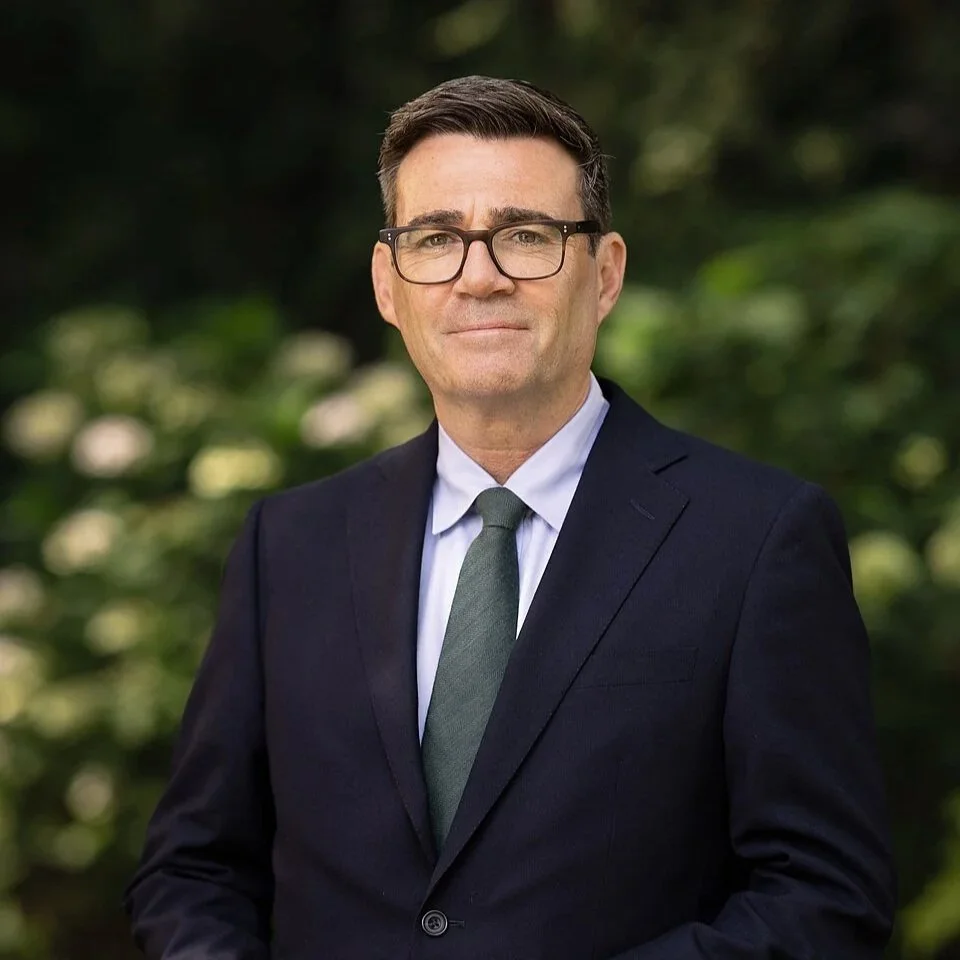
Coming during the SNP's annual conference, the speech inevitably attracted political attention. But beyond the constitutional debate was a wider argument about devolution, economic growth and how Scotland's communities can have greater influence over their futures.
Burnham's proposals particularly resonated with me, having travelled to Stirling the previous week for a roundtable with Chris Kane MP as part of The Purpose Coalition's Place & Opportunity Commission.
Both raised an important question: how can national policy better recognise and build on the strengths, knowledge and ambitions that already exist within local communities?
A new approach to Scottish devolution
The most significant announcement was Burnham's offer to work with First Minister John Swinney on a new model of regional economic empowerment.
Rather than simply transferring responsibilities from Westminster to Holyrood, Burnham argued that powers and resources should move further into Scotland's cities, regions and communities.
Central to this was an offer to devolve elements of Department for Work and Pensions employment support, allowing Scotland to develop more localised approaches. He also proposed exploring greater regional control over innovation, enterprise and employability funding, alongside closer coordination on transport, housing and investment.
Describing his ambition as "devolution by default", Burnham highlighted the economic differences between Scottish communities and the limitations of centrally designed policies.
The underlying argument is that economic opportunity is shaped by local circumstances, from transport connections and housing to educational institutions and industrial strengths.
Greater local decision-making could allow these factors to be considered together, although meaningful devolution also requires sufficient resources, long-term certainty and coordination between governments.
Connecting industrial growth with local opportunity
Burnham also placed considerable emphasis on Scotland's industrial future, highlighting opportunities in defence, shipbuilding, energy and advanced manufacturing.
He welcomed the Scottish Government's decision to match a £10 million UK Government commitment towards two defence technical excellence colleges, alongside continued support for Scottish shipbuilding and efforts to attract investment at Grangemouth.
Drawing on his experience as Mayor of Greater Manchester, he also highlighted the purchase of buses manufactured by Alexander Dennis in Falkirk, arguing that public procurement should consider its wider contribution to domestic manufacturing, employment and local economies.
This raises an important point about the value of public investment. Major infrastructure projects and industrial contracts can support local supply chains, apprenticeships and skilled employment, creating benefits well beyond the immediate project.
But investment alone does not guarantee that local people can access the opportunities created.
Connecting employers, colleges, universities and employment services is therefore essential, particularly where skills shortages exist alongside economic inactivity.
Employment support shaped around people
Perhaps the most interesting policy proposals concerned employment support.
Highlighting the number of young people in Scotland not in education, employment or training, which he described as approximately one in six, Burnham questioned whether centrally designed programmes can respond effectively to different local circumstances.
He referenced the review led by Alan Milburn and the principle of "names not numbers", advocating more personalised approaches to employment support.
Someone experiencing poor mental health, caring responsibilities or low confidence may need very different assistance from someone who primarily lacks technical qualifications.
Equally, the opportunities available in Glasgow, Dundee or rural Scotland reflect different local economies.
Bringing employers, education providers, public services and community organisations together could allow employment support to respond to these circumstances more effectively.
The opportunity extends beyond helping people into their first job. Sustained employment, career progression and access to retraining throughout working life are equally important.
Reflections from Stirling
These themes were particularly relevant to our Place & Opportunity Commission roundtable in Stirling on 8th October.
Alongside Chris Kane MP, we brought together representatives from Robertson Group, Bell Group, the University of Stirling, Forth Valley College, Stirling Council, Stirling Community Enterprise and Go Forth Stirling to discuss the region's economic strengths and barriers to opportunity.
One recurring theme was the relationship between investment certainty and workforce development.
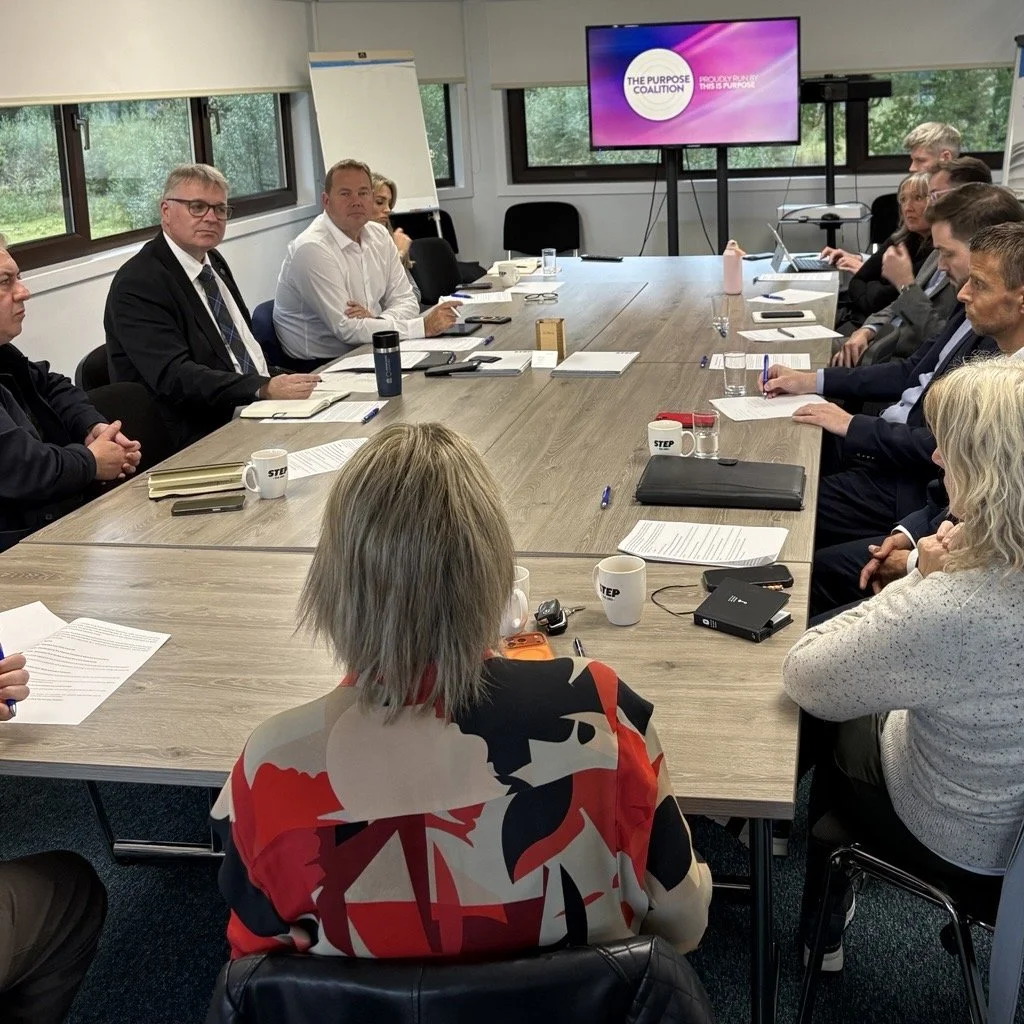
Construction employers highlighted the difficulties of committing to apprenticeships when future infrastructure pipelines remain uncertain. Participants supported a longer-term development strategy, providing greater confidence for businesses and education providers to invest in skills.
Our discussions extended beyond qualifications and available jobs. Rural transport, mental health, childcare costs and housing all emerged as factors affecting people's ability to access and sustain employment.
Despite Stirling's strategic location between Glasgow and Edinburgh, connectivity challenges can restrict opportunities across surrounding rural communities.
The discussion reinforced that local economies already contain considerable expertise and potential. The challenge is connecting those strengths more effectively and ensuring policy responds to the circumstances of individual communities.
Bringing local knowledge into national policy
This principle is central to The Purpose Coalition's Place & Opportunity Commission, co-chaired by Rt Hon Justine Greening and Paula Sherriff.
Through constituency roundtables convened with MPs, we are bringing together employers, universities, colleges, public services and community organisations to examine how different parts of the country can strengthen economic opportunity.
Our programme continues on 23rd October in Edinburgh with Dr Scott Arthur MP, and in Manchester with Afzal Khan MP.
Further sessions are planned in North Warwickshire, Southampton, Ayrshire and Carlisle before the end of the year.
These discussions will contribute to our first Commission report, bringing together local evidence, practical case studies and recommendations for policymakers.
The aim is not simply to identify barriers, but to understand what is already working, where collaboration can be strengthened and how national policy can better support local ambitions.
Unlocking the potential within our communities
Perhaps the most interesting aspect of Burnham's speech was his recognition that economic potential cannot be understood solely through national statistics or decisions made in government departments.
It also exists within individual communities, businesses, educational institutions and the relationships between them.
Our discussions in Stirling reinforced this. Employers understand emerging skills shortages, education providers are developing pathways into employment, and community organisations understand the practical barriers people face.
Bringing those perspectives together can reveal opportunities that might otherwise be overlooked.
It also challenges the tendency to view communities primarily through the problems they face. Stirling's strategic location, heritage, established employers and educational institutions are significant assets. The question is how those strengths can support broader economic participation.
Burnham's speech opens up an important conversation about how national government, regional leaders and local organisations can work more effectively together.
For our Place & Opportunity Commission, that is precisely why connecting local experience with national policymaking matters.
The opportunity is not simply to move power closer to communities, but to bring the knowledge, experience and economic potential of those communities closer to the heart of policymaking.
And that is a conversation worth having well beyond Scotland.